Artificial turf can become too hot for dogs in Arizona, especially in direct afternoon sunlight. That does not automatically make it a bad choice for a dog yard. The important questions are how the yard is shaded, how the turf drains, what infill is used, and whether your dog has a cooler place to rest.
In Phoenix, Mesa, Gilbert, Queen Creek, Chandler, and Scottsdale, homeowners often choose artificial turf because it eliminates muddy paws, dead grass, bare patches, and constant mowing. But a green surface is not automatically a cool surface. Turf, concrete, pavers, asphalt, pool decking, and decorative rock can all become uncomfortable during an Arizona summer.
Artificial turf can work for Arizona dogs, but it should be designed as part of a cooling and drainage plan.
Can Artificial Turf Burn a Dog’s Paws?
Yes. Any outdoor surface can burn a dog’s paw pads when it becomes hot enough. Puppies, older dogs, flat-faced breeds, short-legged dogs, and dogs with sensitive paw pads may become uncomfortable faster than other dogs.
Use the back-of-the-hand test before allowing extended outdoor play. Press your hand against several sections of turf for several seconds. If the surface is too hot for your hand, it is too hot for your dog’s paws. Test multiple locations because turf can heat unevenly near block walls, windows, pool decks, and west-facing walls.
Watch for paw lifting, hopping, licking the pads, limping, refusing to cross the yard, excessive panting, or immediately seeking the door. These signs mean the dog needs to leave the hot surface.
Why Does Artificial Turf Get Hot?
Natural grass cools through evaporation. Artificial turf does not have that living cooling process, so its blades and base absorb solar heat. Darker turf, direct sunlight, nearby masonry, dry conditions, and a lack of shade can all increase surface temperature.
A west-facing dog run beside a block wall will perform differently from turf beneath a mature tree or pergola. That is why a contractor should evaluate the actual yard instead of recommending the same product and layout for every property.
How Do You Cool Artificial Turf for Dogs?
Rinse the turf before use
A quick rinse is the fastest way to cool a pet area before a bathroom break or short play session. Focus on the section your dog uses most. The effect is temporary because the surface will warm again as the water evaporates.
Add shade where your dog actually rests
A pergola, ramada, shade sail, mature tree, or properly placed umbrella can make a larger practical difference than a product claim about cool turf. Shade should be located near the dog door, water bowl, patio, or favorite resting area, not simply placed wherever it looks attractive.
See our Queen Creek pergola services if you want to create a more usable shaded area.
Use cooling infill realistically
Some turf systems use moisture-activated cooling infill. These products can help reduce heat when hydrated, but they do not make uncovered turf permanently cool. They work best with shade, a nearby hose connection, and realistic expectations about peak afternoon heat.
Use the yard at cooler times
Early morning and evening are usually better times for longer outdoor sessions. During an excessive-heat warning, a short bathroom break is very different from allowing a dog to run and lie on exposed turf for an hour.
Does Artificial Turf Smell When Dogs Use It?
It can, if urine, debris, or rinse water becomes trapped in the system. Odor problems are usually related to drainage, clogged pores, poor base preparation, insufficient rinsing, or one small area receiving all of the dog’s use.
A proper pet-turf installation should include a permeable base, correct grading, pet-appropriate infill, accessible drainage, and a maintenance plan. No infill eliminates the need to remove solid waste and rinse high-use areas.
Our Mesa irrigation services can help address drainage and water-flow issues before a new surface is installed.
Why Monsoon Drainage Matters
Arizona yards need to handle routine rinsing and urine, but they also need to handle sudden monsoon storms. Before installing turf, check for low spots, downspouts, water flowing toward the house, buried caliche, existing concrete, and areas where water already collects.
Fixing drainage before installation is far less disruptive than cutting open a finished turf yard later. A visually attractive surface can still hide a poorly draining base.
Is Turf Better Than Grass for Dogs?
It depends on how the property is used. Artificial turf can eliminate mud, mowing, dead patches, and much of the irrigation required by a natural lawn. Healthy grass can feel cooler in direct sun, but maintaining it through an Arizona summer requires substantial water and regular care.
Turf is often a good fit for dogs when the homeowner can provide shade, water, drainage, regular cleanup, and a cooler resting surface. A mixed design may be better than covering the entire yard with one material.
What Should an Arizona Dog Yard Include?
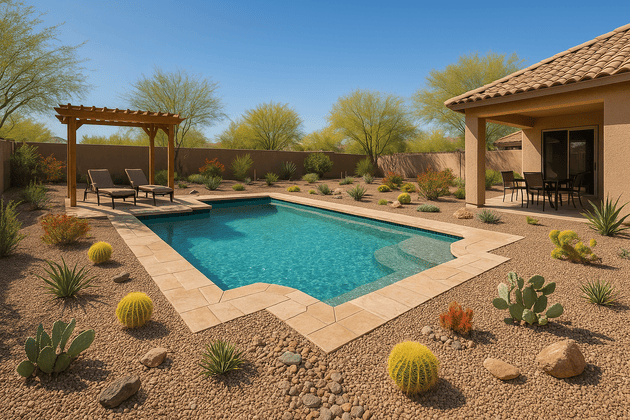
A practical dog yard may combine artificial turf for play, pavers near the back door, a shaded resting area, a stable location for the water bowl, low-water plants around the edges, and a clear route back inside.
Avoid thorny plants beside running paths and sharp rock where dogs jump or turn. Keep access open to pool equipment, irrigation valves, electrical panels, and gates. The best dog yard is designed around how the dog actually moves through the property.
Explore our Mesa artificial turf, Gilbert artificial turf, and Scottsdale artificial turf services.
Questions to Ask Before Installing Pet Turf
- Where will my dog get shade during the afternoon?
- How will urine and rinse water drain?
- What base material and compaction depth are included?
- Will caliche, concrete, or unsuitable soil be removed?
- What infill is included?
- Can the pet area be rinsed easily?
- How will monsoon water leave the property?
- What maintenance is required for odor control?
- What happens if my dog uses one section repeatedly?
Frequently Asked Questions
Is artificial turf safe for dogs in Arizona?
Properly installed turf can be safe and practical, but it can become too hot during direct summer sunlight. Provide shade, water, a cool resting area, and shorter outdoor sessions during peak heat.
Does rinsing artificial turf cool it down?
Yes. A quick rinse provides immediate temporary relief, although the surface will warm again as it dries.
Is cooling infill enough?
No. Cooling infill can help when hydrated, but it does not make turf heat-proof. Shade and sensible outdoor timing are still important.
Does artificial turf cause dog odor?
It can develop odor if urine or moisture becomes trapped. Proper drainage, appropriate infill, routine rinsing, and solid-waste removal are essential.
What if my dog stays outside most of the day?
An entirely exposed turf yard may not be appropriate. Provide a covered structure, fresh water, access indoors, and a cool resting area.
The Honest Answer
Artificial turf can become too hot for dogs in Arizona, but that does not make every turf installation a mistake. The result depends on shade, drainage, infill, surface color, yard orientation, and how the space is used during the hottest part of the day.
The best pet-turf project does not promise that the surface will never get hot. It gives your dog a usable place to play, a shaded place to rest, a clean surface to use, and an easy way back into the house.
Plan a Dog-Friendly Arizona YardEast Valley Landscapers
Get a free landscaping quote.
Contact Us
Call Us: (480) 577-9577
Find Your Service